Showing posts with label Hadrian. Show all posts

Sunday, October 30, 2016

Tomb of Jesus - Shrine of Venus - Jerusalem


Stealing the Goddess – Temple of Venus Jerusalem


Discounting all the retro fitted stories of Saint Helena in her eighties digging up the true cross, intact, with accessories, nails, unrusted, three hundred years after Jesus supposedly used them, what you have left is an architectural monstrosity, exterior at least, of the Church of the Holy Sepulchre in Jerusalem. 

This church covers the area both not only of the most sacred site in Christendom, the empty tomb of Jesus, but also the site of the crucifixion, and throw in a real tourist bonus, the actual tomb of Adam, the first man. 

There have been spotty repairs over the centuries after the earthquakes, fires, crusaders, etc. 

But the truth of the matter is that this holy place/tourist trap is so busy 24/7, nobody wants to close it down for even a day for a good washing let alone some serious repairs and restoration.

It is shared on the clock with three Christian sects, the Latin, the Orthodox and the Armenian Churches.  Fist fights break out regularly if the collection boxes are not turned over in time on a daily basis to the next time share owner.  Sweet Jesus Marie.

Can’t shut the cash cow down long enough to keep it from falling down on tourists one day when the centuries of spotty repairs will finally give way in some future earthquake. 

The story is that Helena, sparing no expense, tore down Hadrian’s temple of Venus to build a new shrine to her newly discovered Christian relics and burial spot on the very site of this former temple of Venus.  

And why is that? Because Hadrian, the god of gods of the Roman Empire was so jealous of the strength of the new Jewish Jesus god, he buried the site of his crucifixion and resurrection under dirt and built his temple of Venus over it to hide the Christian truth.  Yeah right. 

Truth be told, Helena's son Constantine was broke or close to it.  Spending his money on arms and being in constant warfare to keep his throne, what you have really IMHO is a recycled Temple of Venus, the round part of it at least, and with and by coincidence the tomb of Jesus in the exact center of Venus’s old ongoing never torn down temple.

And of course, Hadrian's Temple of Venus in Jerusalem was no doubt round, exotic and beautiful like Hadrian’s Pantheon in Rome and Hadrian’s, slightly smaller, Temple of Venus in Baalbek Lebanon. Hadrian it would seem liked to build, copy, rebuild and improve on designs he admired most in his personal obsession, megalomania, concerned with places of worship.

The rest of the present church is more or less a lean to hodge podge of styles hanging onto the old Temple of Venus, with a slapped together handyman process by crusaders and others, pasting back the pieces of the place after the latest earthquake or burned down by the local Muslim in charge to rid himself of an annoying tourist trap, eyesore, in the middle of his tranquil domain.  (Daily fist fitting among the monks over the collection boxes etc. –  Muslim tolerance can only go so far.)

There is an incident recorded in the early nineteenth century of four hundred pilgrims getting killing in one of these daily monk fests for Christ in Jerusalem.

Going back to budgets.  There is all this crap about digging out what Hadrian supposedly had hidden and replacing it with the basic part of the present structure.  But as I said earlier, I do not think that the money was there.  I also do not think that the creative spark and energy of the Roman Empire of two hundred years previously, under Hadrian, was still there.

(above) So called original plans of Saint Helena’s church or merely modified plans, add ons – basilica, courtyard - right, for a recycled Temple of Venus – left?


History, propaganda, has Constantine as some great force in the West.  I can see where his splitting his empire in two in terms of administration might have made sense.  But he was totally writing the west off. 

Only brute force, such as his army, was the only glue keeping the old empire together.  That and his, designer, centralized, under the command of the army, new religion. 


His building a new capital city in the east was merely building a lifeboat for those who could afford a first class ticket on the Titanic. 

Anyway, getting back to the surviving to this day, but occupied by a zombie worship cult, Temple of Venus in Jerusalem.

The present so called Sepulchre of Jesus, covered by a falling down garage like looking structure (can't shut the tourist cash cow down long enough to repair it), is probably, merely, the carved out stone pedestal of the old, long gone statue of the goddess Venus that once stood where Jesus never lay. 

The Orthodox Church celebrates the Dedication of the Church of the Holy Sepulchre on September 26 (Gregorian), the same date as the ancient Roman festival of Venus.  Some coincidence.  Right?


.

Tuesday, August 7, 2012

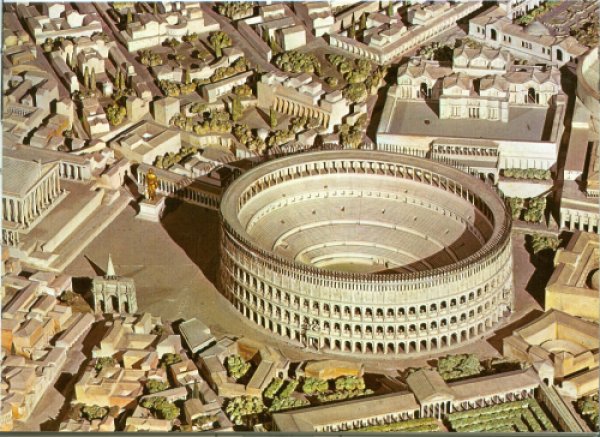
Hadrian’s Temple of Roma and Venus in Rome Italy

Temple of Roma and Venus (center)


The Roman emperor Hadrian built the largest temple in Rome dedicated jointly to the goddesses Roma and Venus. 

Statue of Roma standing

Statue of Roma seated


The temples were back to back, under one roof, with the temple of Roma facing west toward the traditional Roman Forum and the temple of Venus faced eastward toward the Coliseum.


Hadrian’s windowless temples would seem to have an Egyptian influence from his travels there and getting people into a spiritual mood amidst darkness and candlelight.  This, on a raised platform away from the street and foot traffic in the shadow of the Coliseum.


Venus apse


The image of Venus used in her temple was likely a copy of the Praxiteles Greek Venus with a Roman hairdo so famous at the time.  http://en.wikipedia.org/wiki/Villa_of_the_Quintilii

The Roma temple end of the complex was built on with a church of the new Mary, and opposed to the church of the old Mary, its name later changed to Santa Francesca.


The apse of the Venus temple is still visible to the public, where on Good Friday Easter stories and pageants are presented for the tourists.


.

Coliseum in Rome Named after Sun God Colossus Statue of Sol Invictus


The Flavian Amphitheatre, was originally built by the Flavian dynasty, Vespasian and his son Titus, the general that burned down Jerusalem in 70 CE.

The Flavian Amphitheatre or the Coliseum in Rome eventually took on the name of the Colossus of Nero that changed its name and facial image over many centuries and stood in two different places outside the Coliseum.

Hadrian moved the colossus statue to make way for the largest temple in Rome dedicated jointed to the goddesses Roma and Venus  (roma – amor) built across from the coliseum.

The colossus was renamed in favor of the dominant Roman Sun god Sol Invictus.  Sol Invictus was an image that the Emperor Constantine used next to his own in coinage implying his equal status with the sun god.

The giant statue stood anywhere from 90 to 110 (27m to 33m) feet tall, approximately two-thirds of the height of the coliseum.

The bronze from the statue and most of the marble of the Coliseum was removed and recycled into the building of Saint Peter’s Basilica across the river Tiber.


Saturday, September 17, 2011

Stealing the Goddess – Temple of Venus Jerusalem


Discounting all the retro fitted stories of Saint Helena in her eighties digging up the true cross, intact, with accessories, nails, unrusted, three hundred years after Jesus supposedly used them, what you have left is an architectural monstrosity, exterior at least, of the Church of the Holy Sepulchre in Jerusalem.

This church covers the area both not only of the most sacred site in Christendom, the empty tomb of Jesus, but also the site of the crucifixion, and throw in a real tourist bonus, the actual tomb of Adam, the first man.


There have been spotty repairs over the centuries after the earthquakes, fires, crusaders, etc. 

But the truth of the matter is that this holy place/tourist trap is so busy 24/7, nobody wants to close it down for even a day for a good washing let alone some serious repairs and restoration.

It is shared on the clock with three Christian sects, the Latin, the Orthodox and the Armenian Churches.  Fist fights break out regularly if the collection boxes are not turned over in time on a daily basis to the next time share owner.  Sweet Jesus Marie.

Can’t shut the cash cow down long enough to keep it from falling down on tourists one day when the centuries of spotty repairs will finally give way in some future earthquake.

The story is that Helena, sparing no expense, tore down Hadrian’s temple of Venus to build a new shrine to her newly discovered Christian relics and burial spot on the very site of this former temple of Venus. 

And why is that? Because Hadrian, the god of gods of the Roman Empire was so jealous of the strength of the new Jewish Jesus god, he buried the site of his crucifixion and resurrection under dirt and built his temple of Venus over it to hide the Christian truth.  Yeah right.

Truth be told, Helena's son Constantine was broke or close to it.  Spending his money on arms and being in constant warfare to keep his throne, what you have really IMHO is a recycled Temple of Venus, the round part of it at least, and with and by coincidence the tomb of Jesus in the exact center of Venus’s old ongoing never torn down temple.

And of course, Hadrian's Temple of Venus in Jerusalem was no doubt round, exotic and beautiful like Hadrian’s Pantheon in Rome and Hadrian’s, slightly smaller, Temple of Venus in Baalbek Lebanon. Hadrian it would seem liked to build, copy, rebuild and improve on designs he admired most in his personal obsession, megalomania, concerned with places of worship.

The rest of the present church is more or less a lean to hodge podge of styles hanging onto the old Temple of Venus, with a slapped together handyman process by crusaders and others, pasting back the pieces of the place after the latest earthquake or burned down by the local Muslim in charge to rid himself of an annoying tourist trap, eyesore, in the middle of his tranquil domain.  (Daily fist fitting among the monks over the collection boxes etc. –  Muslim tolerance can only go so far.)

There is an incident recorded in the early nineteenth century of four hundred pilgrims getting killing in one of these daily monk fests for Christ in Jerusalem.

Going back to budgets.  There is all this crap about digging out what Hadrian supposedly had hidden and replacing it with the basic part of the present structure.  But as I said earlier, I do not think that the money was there.  I also do not think that the creative spark and energy of the Roman Empire of two hundred years previously, under Hadrian, was still there.


(above) So called original plans of Saint Helena’s church or merely modified plans, add ons – basilica, courtyard - right, for a recycled Temple of Venus – left?


History, propaganda, has Constantine as some great force in the West.  I can see where his splitting his empire in two in terms of administration might have made sense.  But he was totally writing the west off. 

Only brute force, such as his army, was the only glue keeping the old empire together.  That and his, designer, centralized, under the command of the army, new religion. 


His building a new capital city in the east was merely building a lifeboat for those who could afford a first class ticket on the Titanic.

Anyway, getting back to the surviving to this day, but occupied by a zombie worship cult, Temple of Venus in Jerusalem.

The present so called Sepulchre of Jesus, covered by a falling down garage like looking structure (can't shut the tourist cash cow down long enough to repair it), is probably, merely, the carved out stone pedestal of the old, long gone statue of the goddess Venus that once stood where Jesus never lay.

The Orthodox Church celebrates the Dedication of the Church of the Holy Sepulchre on September 26 (Gregorian), the same date as the ancient Roman festival of Venus.  Some coincidence.  Right?


-

Thursday, August 4, 2011

Allah – By Jove! – Jerusalem Acropolis


Allah – By Jove! – Jerusalem Acropolis

Muhammad’s “night journey” to the “farthest temple” seems to be the only claim the Muslims have to the Noble Sanctuary and or Temple Mount in Jerusalem.

Since there were supposedly no standing buildings there on Temple Mount at the time of Muhammad’s dream, it is possible the “farthest temple” might not be in Jerusalem.

The present Dome of the Rock with the iconic gold dome on the Noble Sanctuary may or may not be a recycled Church of Sacred Wisdom built by Constantine.  Constantine in turn may have recycled a forecourt structure of Hadrian’s Temple of Jupiter complex on the destroyed previous Temple Mount complex, defunct as of 70 C.E..

If this is all confusing to you, it has been to me trying to figure out what this cultural dispute over the disputed real estate aka Temple Mount aka Nobel Sanctuary is all about.  In fact depending on which side you talk to, once you use the term TM or NS, the party you are talking to assumes your opinion and position on the negotiating end of things and shuts you out if you use their wrong term.

So, in the case of the disputed real estate in the vicinity of Solomon’s alleged temple site and Muhammad’s alleged night journey and on a raised man made stone platform or acropolis, I will, from this point in time forward, also refer to the area as Hadrian’s Temple of Jupiter Complex or HTJC or just plain Jerusalem Acropolis.

Bar Kochba's rebellion and occupation of the Jupiter Temple as the Third Jewish Temple around 132 C.E. is generally not recognized as fact and remains speculation until historical proof is found which is not likely. Titus scraped the acropolis clean in 70 C.E., followed by Hadrian and his vanity building project - Roman vision thing, followed by Constantine's turning the place into a quarry followed by the Arabs continuing the quarrying process to build their own sacred structures.  

Hadrian is also universally known for Hadrian’s Wall in Scotland, to the Pantheon in Rome, to his massive Smithsonian like private pleasure dome summer palace, at Tivoli, outside Rome to the greatest (biggest) temple ever built to Jupiter in Baalbek Lebanon, to his new unfinished Constantinople like project of Aelia Capitolina aka the former Jerusalem.  So much major construction and so little time.  Poor Hadrian.

Back to Temple Mount or I should say acropolis/HTJC.  I have read many, many Jewish, Christian theories on where the original Solomon/Herod temple stood on the HTJC acropolis area.  

And in most of these documents about the HTJC acropolis, they assume you know the north, south, east, orientation of the geography in question.  I have never been to Jerusalem so I got lost quite a few times reading about all this so-called dusty history mixed with more speculation more than with hard provable facts.


There is a theory and I will hopefully correctly attribute it to a Tuvia Sagiv that states something like the great builder Hadrian’s floor plan for Jupiter’s temple in Baalbek (above, below) may have the same architectural flow and or same floor plan in the Aelia Capitolina acropolis dedicated to Jupiter in the former Jerusalem.


The theory goes something like Hadrian was known to duplicate a lot of things.  It is said that he had a copy of the circular marble Cnidus Greece shrine including a copy of the famous Aphrodite by Greek sculptor Praxiteles.  Some tourists take home postcards or snapshots.  Hadrian brought home whole temples or duplicated them at his Tivoli palace.


So it is not so far-fetched that maybe the Aelia Capitolina Jupiter complex in the former Jerusalem might match the Baalbek complex as well to some exact degree.

The forecourt structure in Baalbek is six sided or hexagonal.  The same forecourt in the HTJC may have been eight sided or octagonal and match the base blueprint of the present Dome of the Rock shrine.  Just a theory. 

The thing is that the theory I have seen has no measurements. Beyond that the visual proportions of the forecourt, full court and temple of Jupiter seem to match this theory on a visual level.  So not only does the Dome of the Rock seem to fit as a later structure built on a forecourt structure, the famous Al Aqsa Mosque (below) at the far southern end of the Jerusalem acropolis would seem to have been built on the foundations of the Temple of Jupiter torn down by Constantine in need of stone for massive Christian shrine building as in the Church of the Holy Sepulchre and the totally defunct, later built by Justinian, Nea Church (left - above). 


These two structures, the recycled temple of Venus/Church of the Holy Sepulchre and Nea Church framed both ends of the grand boulevard, the Cardo Maximus, the massive  new main north south road of Hadrian’s new Roman city, Aelia Capitolina.  The long term city plan started by Hadrian continued up until the Arab conquest.


Constantine when he legalized Christianity with the Edict of Milan of 313 C.E., also decriminalized Judaism as part of that act of tolerance to all religions.  Rather than let the Jews have Temple Mount back to compete with his new designer religion of Christ(ianity), he sacked all the building stones of Hadrian’s acropolis to follow through on the original design and building of the new Roman city next to the acropolis.  This put the Jewish question back into political limbo.


The Church of Sacred Wisdom recycled into the Dome of the Rock may have not been standing at the time of the prophet’s night dream, earthquakes and all that.  The Nea Church, the biggest church in Christendom outside of maybe the Vatican Hill structure fell down and into disuse for many centuries not out of Islamic destruction but because of earthquakes.  A theory states that many of the stones of the Jewish temple first went into the building of the Jupiter temple before they made their way all up in time into the Nea Church as well as into the entire infrastructure of Roman, Byzantine and Medieval Jerusalem.


To the point is that there is not much left of the Jewish Temple there on the Jerusalem Acropolis.  Many historians agree that the original Jewish temple building and forecourt faced east and is probably able to fit in front of the al Aqsa Mosque if reconstructed after archeological digs, scientific studies etc.  Truth also is that if the original Solomon Temple thingy gets reconstructed for the tourists, religious fanatics etc. it would not only be in front of Al Aqsa but forty feet lower than that mosque. 


While the Christians and Jews who want the second/first coming and in fact the end of the world, they would destroy the Dome of the Rock and Al Asqa to have a dominant Jewish only complex. Truth is that all standing at present major structures should be allowed to remain in presence of a reconstructed Jewish Temple below the present high point or grade of Hadrian’s Jupiter Temple Complex or acropolis.


In fact, image above points to the fact that Jews already and by tradition worship at the Western Wall below where the original Jewish temple once stood.  Image above of the Jerusalem Acropolis, left is Western Wall aka the Wailing Wall.  Dome of the Rome, top center,  Al Aqsa Mosque, bottom right.

What I envision if not getting a fully rebuilt temple, perhaps the old Jewish temple might be ghosted in structural steel to show its original presence, not unlike the Benjamin Franklin House in Philadelphia (below) where they have no historic evidence of what it actually looked like, though the foundation is still there. 


Will it be a functioning temple again? I don’t know.  I for one would object to animal slaughter. 

Anyway, maybe an eternal flame in the old Holy of Holies and for privacy, maybe an enclosed dome like covering like that of the British Museum Library courtyard.  Will not have to rub elbows with your neighbors.


Use your imagination.  It is time to unite that region in something other than mutual hatred.


Pleasant dreams. 


Thursday, May 26, 2011

The old and new Pantheons in Rome

I love architecture. Everybody knows about the Pantheon in Rome. It is almost two thousand years old and it is virtually intact.

It is the only intact ancient Roman, still functioning, original building in existence.

The Pantheon and the name imply was a home or a temple to all the gods of Rome.

It of course got turned into a church somewhere along the way. The pagan idols got scraped away and replaced with Christian idols of the saints etc. It also got an interior face lift during the Renaissance with a lot of marble and design and whatever.

The most important feature of the Pantheon is the Oculus, the eye open to the sky in the center of a vaulted circular concrete ceiling/roof.

Hadrian designed the Pantheon to be a solar calendar. Indeed the sun, through the oculus, goes through the front door on the June 21st Solstice.

The only thing that saved this pagan temple from destruction was its construction, very hard to destroy, and its being dedicated to the catholic earth goddess Mary in 609 by bishop/pope whomever.

What I find interesting is that when it got its Renaissance makeover was that Rome’s Pantheon moved across the Tiber River to the new Saint Peter’s being built.

Of course you are going to say that Saint Peter’s is filled with statue after statue of Christian saints and not pagan idols.

If a second century Roman got swept up into a UFO and was frozen and came back to today, deposited back onto the streets of Rome in his toga and he saw the present church of Mary and the Martyrs, he might wonder what had happened to the gods.

If our ancient visitor might by chance catch a glimpse of the one of the tallest structures in Rome today, if he walked there into present day St. Peter’s he would cry and realize that they moved the Pantheon across the river to Vatican Hill.

Whatever.

Wednesday, May 4, 2011

When were the Gospels written / 120 -140 A.D./C.E. ?


Following my own timeline thing and in my personal quest of a better truth of the founding and evolution of the Christian faith, I am saying, I am believing that the four Gospels were assembled somewhere between 120 and 140 A.D. of the common western era.

I say this in my own Jesus seminar styled search. I say assembled above which a little is bit different than written. I believe that the sayings of Jesus in a Gospel of Thomas like format got expanded into metaphoric descriptive fashion.

As in Jesus, if he said this, he probably said it to a crowd and or to a select few. The elusive “Q” document of nineteenth century Christian scholarly fame was no doubt a bunch of quotes on the back of a lot of envelopes from possible eyewitnesses to the event of that great moral teacher’s life.


Of course they did not have envelopes back then but I think you get the idea and image from what I just said.


The other thing that makes me think that the three synoptic gospels were written between 120 and 140 A.D/C.E. is the fact that Jesus is still Jewish in them. He is folksy and short in speaking style.


Going back to my own blog

Trajan’s demonization of the Jews

and the Kitos genocidal Roman war against the Jews and Semites of North Africa and the Middle East, I see the dividing line between the Jews and Christians in real form if not in written form about this time.


In fact while reading about that holocaust, that it started in Cyrene, present day Libya, North Africa, I went on to see that the first three Gospels mention a Simon of Cyrene, a tourist and or refugee of sorts in Jerusalem on the first Good Friday.

To refresh your memory here are those Simon of Cyrene quotes from the first still Jewish Christian gospels.


“And they compelled a passer-by, Simon of Cyrene who was coming in from the country, the father of Alexander and Rufus, to carry his cross.” (Mark 15:2).


“And as they led him away, they seized one Simon of Cyrene, who was coming in from the country, and laid on him the cross to carry behind Jesus.” (Luke 23:26).


“As they went out, they came upon a man of Cyrene, Simon by name; this man they compelled to carry his cross.” (Matthew 27:32).
Researching the Internet for this common thread/reference to Simon of Cyrene led me to this interesting article and quotation.
 
Gospel Mysteries – Gospel of John
Similarly, many of the stories found in the other gospels, but not in John, probably came from sources known only to their authors. Thus, the use of different sources can easily account for many of the differences between John and the other gospels.


But that explanation doesn't work very well for some differences, especially the difference in how Jesus is depicted. The first three gospels portray him as a teacher, healer, and prophet whose main concerns are the problems of society and the need for people to live more virtuously. In these gospels he shows great compassion for poor, oppressed, and outcast people, and he heals many disabled and demon-possessed individuals. When he teaches, he talks in simple language, draws images from everyday life, and uses parables to make his points.


But the gospel of John depicts him quite differently. In this gospel he talks in a different style, and often uses words and ideas not found in the other gospels. Instead of making short penetrating statements about how people should live, he gives long speeches about why he came to earth and why people must accept him as their savior. He rarely uses parables, and he doesn't cure any cases of demonic possession.
Putting the above quote aside for a few moments, I had already decided that this reference to Simon of Cyrene in the three gospels had some real significance and was possibly in fact a little bit of propaganda and or proselytizing of early Christians toward the surviving Jews of the Kitos War 115-117 C.E..


That is, you have an executed Jesus, you have a crucified Jesus, why not build on it as a recruiting tool to many Jews who survived the recent genocide and show empathy in the way of death. No doubt there were thousands of Jews crucified along the Roman roads that connected North Africa to Jerusalem and onto Syria and Turkey (Asia Minor) after the Kitos War.


Now getting back to the recent quote above, the whole article was quite interesting. From that article I get the sense that the original three gospels are written in a Jesus is a common man mode with simple parables and messages. That the original Christians were survivors of the Great Jewish Revolt 66-70 C.E. and living in rural areas all over the Middle East.


That the reference of Simon of Cyrene sharing a cross with Jesus occurs in Mark and is copied into Matthew and Luke. By this I see that Simon of Cyrene was not haphazardly added to already written gospels but was part of original text. As such, I speculate that the first three synoptic gospels are assembled/written in post 117 A.D. after the Kitos War.


That the scattered communities across the middle east and in perhaps Rome as well were living off legend, oral tradition and the Letters of Paul and were coming together, in a still recruiting from the original Jewish cult thing, and turning into a new sect different than the original Judaism.


In fact I think that the historian Suetonius’ quote of fellow historian Tacitus in the persecution specifically of “Chrestiani” is a retroactive cut and paste job of history. That after the Kitos War, the more sophisticated Jewish Christians in Rome were doing a sudden Public Relations blitz and press release thing to say that their history as Christians (sans the Jewish in Jewish Christian thing) went back many decades before the recent unpleasantness in the African and Middle East provinces.


That to say you were persecuted by a hated dictator like Nero was a positive and not a negative in the early propaganda of the church. That and you were retroactively and consciously separating yourselves from the traditional Judaism thing.


In a way, while a rural populist thing is going on outside of Rome, the urbane, sophisticated Roman Christians came up with an Urban Gospel in the form of John. That these changes within the same movement occurred simultaneously or close to it.


In fact, I see the rural country bumpkin preacher of Jesus transformed into this polished Gnostic like god (small g) in the Gospel of John. The Gospel of John I see as the urban guide to the new Christian cult for the largely Gentile only city dwellers from the Mid East, through Greece and into Rome. This, especially after the final Jewish war by Hadrian 132-135 blew all Jews into definitive and seemingly eternal Diaspora.


I find it incredible that I cannot find much on the last two of these three Jewish wars, that they don’t get much mention on the Internet. It is possible that Jewish scholars have not yet put history from books onto the Net. It is also possible that Judaism prefers to forget the whole matter. That the only much quoted writings of the history of the Jews is from Jewish/Roman writer Josephus Flavius and centering on the destruction of Herod’s greatly altered/remodeled Second Temple is enough to address that period in religious/political history.


In any case, my studies and research continue. I hope in the very least that this crazy theory of mine makes some sense and will in time make more sense as bloated, vested Christian theologians die off and the true spirit of Jesus in the early real Christian church evolves back to not a local pagan level but to a truly first and global belief system.


Wednesday, March 9, 2011

Allegory of Peter thrice denying Jesus

I have to wonder if the story of Peter denying Jesus three times in all four gospels – if it is not an allegory of sorts. It struck me like a lightning bolt just a few hours ago of my writing this.

I am using a time line to look at the development of the four gospels. I had the thought some weeks ago that maybe the meeting of Peter, James and Paul in Acts was merely a hypothetical event reconstructed from the histories of Josephus Flavius that mention the death of one James the Just, a brother of Jesus, a fairly common name back then.

I am not trying to be a heretic here. But with that thought of some weeks ago, I have done some research and found that others also think that maybe Josephus is the source material on this so-called brother of Jesus called James as well as other bits and pieces of the NT.

I have already written here that I think (I feel with my heart) that Acts is a bridge document to fill in some historical gaps not available to scholars after the fall of Jerusalem in 70 C.E.. The fall of Jerusalem is like the destruction of the city in a fire. Like in the middle of a struggle between life and death, do you save the local library or do you save yourself and your family? Good question.

Around this time, the so-called Dead Sea Scrolls seemed to have been hidden away. But speculation on who wrote them and why they got hidden could go on for decades. Interesting tangent though.

I recently got into some genealogical research on the internet trying to piece together some oral family history with real dates and places.

Alas, the only major help out there on the internet are copies of the U.S. Census. There is a privacy thing meaning that you cannot get to the 1940 census yet. So you pretty well have to look up your grandparents and great grandparents starting with the 1930 census and before. I lot of what I am looking for, need, is probably on hard copy at Philadelphia city hall in the form of deeds, marriage certificates etc.

And then there is the hassle of trying to get copies of birth certificates from the states. More privacy issues and cost to obtain computer printouts of a certificate if still on file over a hundred years later etc.. A lot of leg work is still necessary to figure out my family history before 1850.

There is also a great big gap in the middle of my family research. The U.S. Census of 1890 was destroyed in a fire. So you have a twenty year gap in material available if the census is the only reliable documents available. This at a critical juncture of my research. Oh well.

Still, it gives me pause to think. I am trying to fit oral history into historical fact. Still can't find the link that puts me as a supposed distant cousin of W.C. Fields. There is that 1890 historical gap and a lot of Smiths to look up etc. There are a lot of Smiths, even back then. But I keep trying.

It is strange but the hundred and fifty or sixty years that I am looking at is extremely limited, is awfully limited if you do not have family bibles or letters or photographs to go along with the oral history. The maiden name of women in the family tree are not so easy to find. Not mentioned on the census.

You can juggle the names around to fit your oral history exactly. You can also imagine what it was like for eleven people to live in a three bedroom Philly row house etc..

People on the internet site have constructed family trees that overlap with mine and list questionable names and dates. A lot of people go to the first Mike, Mary or Patrick and assume that that is their great grandparent. It is because I have written records from the national archives to contradict this - what I see is that some of these trees are sloppy, unprofessional genealogy. People believe what they want to believe and move on.

If you look at the hundred or so odd years between the life and death of Jesus in first century Palestine and consider that in that time Jerusalem disappeared and the Jews got dispersed several times, thrown out of Judea, you have to wonder where the historical paperwork for the four gospels came from. They probably did not get written in anything like the lifetime of any eyewitnesses of Jesus or his ministry.

Off on another tangent, I run into the fact or the supposed fact that depending on which ancient writings you read or interpret, that Linus was the “first” bishop of Rome from about 67-79 C.E.. If this is true, when and where does Peter the first pope come onto the time line.

The myth of Peter in Rome is found in the Acts of Peter, an apocryphal book that has talking dogs and Peter being crucified upside down after he gets the “quo vadis” line from the lord on the Appian Way when he tries to escape imminent arrest and death in Rome.

I do not want to make light of Peter, but this “first” pope Linus is supposed to have been made bishop by Paul. There was no doubt a possible Peter and Paul fight in the beginning of the church or was there such a fight or did either Peter or Paul really exist in the form as we traditionally visualize them in Rome at all.

Or was the Paul wing of the Christian church too powerful a thing to fight in the early days of the church? Did the follow up bishops or popes have to put the Paul wing of the party in its place. Did the gospels finally show a figure of Peter as more powerful than the Paul wing and its agenda?

Did the written gospels show Simon now called Peter in the gospel of John rewriting the first three synoptic gospels? Peter is proclaiming love for Jesus three times in the last chapter of that strangely written gospel to negate his three denials.

I always thought that this last appearance of Jesus to Peter in John was somehow a political statement.

You have Paul under house arrest at the end of Acts and nothing mentioned of Peter in Rome yet. Chapter 21 of the Gnostic style gospel of John is a bridge chapter, document to connect Peter directly to Jesus over the questionable self appointed, after the fact, apostle of Paul aka Saul of Tarsus. Enough of opinion.

Now for speculation on a time line.

Since I feel that the four gospels are written near the beginning to the middle of the second century, a time line about the final break of Jews and Christians is complete with not one but three so-called Jewish -Roman revolts in 66-70 C.E., 115-117 C.E., 132-136 C.E..

That if there is symbolism or hidden meaning of Jesus written into the official boiler plate gospels, it is perhaps this. That the three denials of Peter towards Jesus in the early hours of the first Good Friday in the four gospels are an allegorical reference to the denial three times by the Jews - in hope of independence, justice and a messiah - and in direct rejection three times of Jesus as that messiah.

Simon the Jew becomes Peter the Roman. This is the symbolic break in writing with the Jews.

That after Hadrian's final solution and holocaust of the Jews in Palestine in 136 C.E., Jews and Christians were separate political and religious entities from that time forward.

That even then, in a symbolic sense, Peter is somehow mythically transported to Rome and the “first” bishop in opposition to Paul's literate scholarly mission of faith. Paul and his writings won't get a thorough going over for another fourteen hundred years, not until the Reformation. Until then nothing but Roman pagan traditions, rituals and myth to hide the true social message of Jesus.

The Christians that count in 150 A.D., the Christians in Rome, anoint Peter in post apocalyptic literature as the chief honcho, the first pope, retroactively, into the imperial capital and center of the world. Great script writing. Fade to black. The end.

Applause.